Thursday, 5 August 2010

Bioshock 2

Photobucket

Though it surprises me to this day, Bioshock 1 simply did not call out to me. Sure, I was deeply impressed with the game's dynamic opening and its original setting, but frankly it didn't take long until the die-and-die-again gameplay frustrated me. Upon hearing that Bioshock 2 was a 'more of the same' sequel, my hopes weren't exactly high.

Indeed, the first hour or two of Bioshock 2 hardly prove this view wrong. After a short and somewhat baffling introduction in which the protagonist shoots himself in the head, the player wakes up in Rapture and the adventure begins. This is perhaps where the game does lacks most; the awe of entering this dying, mysterious world that one gets at the beginning of the predecessor was the perfect start. Now, Rapture is nothing new; instead you're already there and expected to just get on with it. The storyline isn't as inventive either, instead of exploring good and evil, human worth and self-identity as the first did, it's now simply a struggle to save your daughter from your psychotic wife. Granted, there are emotional moments along the way, but it disappoints that 2K Games couldn't be a little more creative with the plot.

Given a little more time, however, and I found to my relief that combat is no longer such a constant losing battle. Did I mention that you play as a Big Daddy? As an anomaly to the usual Big Daddy experiments, you're not entirely programmed to follow and protect Little Sisters, you have a mind of your own, not to mention your right hand has a giant drill attached. Fear not, you won't be lumbering round like an 8-foot tall snail; you are an earlier model which makes up for a lack of titanic strength with the agility of any other human. The main difference I noticed in the balancing of the combat was that enemies are slightly fewer in number and do a little less damage. Personally, being killed and instantly being revived in a Vita-chamber rather than going back to a checkpoint really irritates me as it feels like a cheap tactic, and thankfully there was a lot less dying this time around. 

Most impressive about the revamp is certainly the sheer number of plasmids and tonics. There is now about 30 different plasmids on offer, many with two or three upgradeable forms, and a selection of tonics that is two or three times the size of the previous game's. Weapons are also an improvement. Forget ordinary human weapons - the pistol is replaced with a Rivet Gun, the Tommy gun with a triple-barreled .50 calibre turret, the wrench with the mighty drill (a personal favourite). These are only the first three weapons you'll obtain, there are several others and of course all weapons can be customized, use different ammo types and upgraded to one's preference. There isn't a large host of new enemy types, but considering the more exciting armoury of weapons and plasmids at your disposal, combat never gets old.

As the hours went on, I was pleasantly surprised to see that the game did get better and better. The storyline doesn't exactly improve, but as well as collecting more weapons and exploring new areas, there are interesting extra mechanics that spice up the pacing of the game. One of these is the underwater sections. Being in a Big Daddy suit, you're able to go to Rapture's exterior and walk the seabed at certain parts. There's zero fighting on these mini-missions, just the eerie silence in stark contrast to the hell indoors, broken only by your heavy breathing inside the helmet, and the deep thuds of your weighted boots on the ocean floor. These sections (ironically) give a breath of fresh air to the gameplay and keep the pacing in check. Another major new element is the addition of the 'adopt' choice when it comes to Little Sisters; they will guide you to a fresh body to extract Adam from, and once you're done defending her while she works, you'll be able to spend this Adam at the nearest shop on plasmids and tonics. Careful though, mess with the Little Sisters too much and you're inviting the wrath of the Big Sister, whose chilling approach leading to a frantic and desperate battle will not be easily forgotten.

The single player story will take on average about ten hours, and this time around 2K have decided to include a multiplayer mode. Just about every player had their doubts about this move, and it seems this time they were quite right to doubt. While you play as a perfectly nimble human with sensible, balanced weapons, Bioshock simply isn't a game made for multiplayer. The maps aren't exactly tactics-based, and despite a good selection of game types most matches will descend into an inevitable mosh-pit of fire and electricity plasmids flying about with little room for skilful play. Adding to this is the Big Daddy upgrade which can be grabbed by whoever happens to be nearby when it spawns, leading to one player being a near-unstoppable tank for a couple of minutes, without any real weakness. If you're looking for a few games of laughs and madness, Bioshock 2's multiplayer does the trick, but this won't be your next big online addiction.

Bioshock 2, this time around, seems to have done well on what the first game didn't, but unfortunately missed out on what the first game did. Story and atmosphere have seemingly been replaced with improved gameplay, and so it's hard to say if it has really succeeded as a sequel or not. If you, like me, felt overly bogged down in Bioshock 1 by endless hordes of Splicers, then you'll be getting your gleeful revenge in this installment. However, players wanting another great narrative in a wholly new environment that will amaze you all over again will be disappointed - this is the same old Rapture again, albeit with a few new toys to play with. 7/10.

Sunday, 11 July 2010

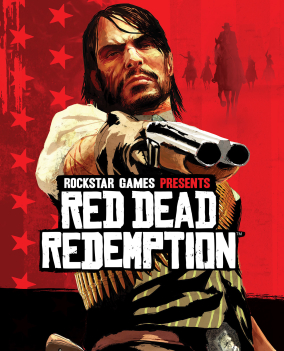
Red Dead Redemption


I know for a fact that there are plenty of people like me who, whilst recognising GTA IV as the technical and satirical masterpiece that it is, struggled to actually find the game a great deal of fun. Let's face it; it was like a great painting when looked at as a whole, but upon sitting down and casually playing bits and pieces of it, it wasn't all that enthralling. This was my main reservation about Red Dead Redemption preceding its release - would it balance great storytelling with genuine enjoyability, and perhaps even a strong multiplayer component? Despite my initial doubt, Rockstar San Diego have blown me away exceeding all my suspicions.

You may have noticed that a Wild West game world is rarely touched upon in modern games, and while some forays have been successful (see: GUN), many have fallen flat on their faces and instead created Hollywood-esque, over-the-top basic shooters fitted into a Western frame. It's clear that in contrast to this, Rockstar have truly done their research on the context, both on historical fact and on the Spaghetti Western films that have inspired the world's archetypal view of the West. The silence of the vast, hazy plains is broken by the chugging of a passing steam train. Drunks stagger blindly out of the swing doors of saloons. The whines of bullet ricochets signal a faraway dispute that has ended in needless bloodshed. This is the world you are pushed straight into from the outset, and even by the end of the single player story, it will still astound you how real this world feels.

Speaking of which, Rockstar have certainly not slacked out on making a lengthy and involving single player experience. In keeping with former standards, it will take the average player roughly 20 hours to complete, and involve traversing the giant map for all it's worth. The storyline is not particularly original - the morally ambiguous tough guy reluctantly has to re-live his messy past to save his family - but what makes it so believable is not the plot but the characters. It's said that the script for GTA IV was ten times the length of the average movie, and this follows suit, in depth and in execution. You'll meet retired gunslingers of old, settlers from the East, bandits and lawmen, tyrants and rebels, in a tale that epitomizes the death of the Old West and the enroachment of trans-continental government rule. 

Red Dead also manages to pull away from its modern-day counterparts in terms of gameplay in just about every area. There are small-scale improvements such as the weapon selection wheel and a more flexible cover system, but there have been several RPG elements added to make every action you make in the dog-eat-dog world significant. For example, there is an Honor system (which anyone familiar with Fallout's Karma system will pick up quickly) that rewards or penalises you for how you treat others, and a large inventory of items you can carry around to either use or sell. What I was most impressed with during the single player game was that there was always something I could be doing, whether in a mission or not. Rockstar have seriously upped the ante in terms of extra activities, as on offer are highly detailed and polished games of Poker, Blackjack, Liar's Dice, Horseshoes, Five Finger Fillet and arm wrestling dotted around the map. There are also bounties to be captured, animals to be hunted and skinned, treasure chests to be found - the list goes on. The game has been in development for a long time and it is in this huge range of possibilities that it really shows.

I know there are enough persnickety people out there for the game to be decried for its technical faults, and to an extent they cannot be blamed. I can't deny that I have had plenty of instances of glitches with NPCs and textures, a couple of saving errors and more than a few animation errors, but this really should be overlooked for all the obstacles that have been overcome in making what is indisputably the best non-city environment ever. The horse animations are near-perfect, and the way animals act towards you both passively and aggressively is incredibly realistic. Visuals are another definite stand-out point and galloping over the rocky prairies as the sun sets on the red horizon is a breathtaking sight.

This huge range of 'plus' points combined to make an unforgettable campaign, but I held my doubts about the multiplayer. Much to my surprise, however, the multiplayer component wasn't just good, it was amazing. It is split between two modes; Free Roam and Competitive. Free Roam is just that - you are given the whole map to explore with friends or other players online, and you are at liberty to do what you please. Apart from having fun in your own ways (a personal favourite of mine was to have fisticuffs on a cliffside) you are given a long list of challenges to complete which easily keep you busy. In Competitive, there is the expected host of game types and map variation, and yet another list of challenges to complete for bonus Exp. It's hard to put a finger on what exactly makes the multiplayer so addictive, but provided you have some friends with the game as well, it will have you coming back time and again, even if it is just to unlock that bull at Rank 50. 

To be honest, I could go on and on describing everything that Red Dead has and explaining why it all just works so seamlessly, but I'll cut it short - this is simply a must-have. Rockstar have outdone themselves in their own form, giving everything the player needs, and doubling it. If you haven't enjoyed a sandbox game before, then this will be the game that will change your mind completely. It effortlessly surpasses every other game of its genre. 10/10.

Sunday, 27 June 2010

Splinter Cell: Conviction


I remember many moons ago getting my Playstation 2 for my birthday, and waking up extra early on the day to play the first game I had for it: Splinter Cell. I was amazed at the depth of the stealth action which required serious thought and planning for every situation, but a few sequels down the line and I had a growing distaste for the series which was going stale. However, this game seemed to signify a turnaround for the style of the Splinter Cell games, and I was intrigued. 

What I was perhaps most happy about Conviction was it doing justice to the storyline of the games. The game definitely appears to have made some turns more towards a third-person shooter but it does not lose its emotional edge by reminding the player what Sam is fighting for: the discovery of his daughter's fate and the corruption of his former agency. The story and script is very well written, including one major twist which may have been a little predictable but was certainly well-presented. Speaking of presentation, the visuals of the game are a particularly strong area. Ubisoft have managed to completely overthrow the generic HUD when updating your objectives, and instead of giving you a box of text to read, throw your instructions on huge letters on whatever wall or vertical surface is nearby. This not only stops you removing your eyes from the action to read out of a rectangle at the bottom of the screen but is also effective in describing Fisher's thought processes. Sometimes a short animation will be shown, or as seen in one particularly emotional cutscene, words will fly around the room describing his mix of feelings. A matching technique to this in contemporary games is yet to be seen.

Gameplay is, however, what I was most apprehensive about as I was worried that the game would become a mundane stop-and-pop, using Sam's rage as a justification for a mindless shooter. Fortunately, this was not the case, as not only is stealth brilliantly constructed, but it's also an option. Sam's gunning hand isn't quite so slow and clumsy now and with a Gears of War-beating cover system you now can choose, at the cost of the game becoming significantly harder, to shoot your way through a situation. A hefty armory of weapons can be collected and customized to your preferences, using points earned by various in-game challenges. To add to the already solid combat, you can do all that Sam has always been able to do: climb walls, hang from pipes and sneak through shadows, which are all well-polished and keep the action fluid. While I was impressed by the exciting range of environments during the single-player campaign, it certainly suffered from the usual problem in most of this generation's games - it was short, and it was easy. When I say easy, I mean I could finish it on the hardest difficulty on my first playthrough, within 7 hours. I would suggest expecting the game to be more of a experience than a challenge. 

The multiplayer is what is left after the campaign, unless you're dedicated enough to complete all the campaign challenges (which are, to be fair, a lot of fun), and it seems this is rather hit-and-miss. Four gametypes are available, and personally I found the selection to be quantity over quality. Last Stand is the now all-too-common wave mode, fighting off endless enemies in a small space until inevitable defeat, and it is probably the most dull of the selection. The other three are based on a fully-fledged co-operative campaign, Hunter being an ordinary playthrough of the campaign with another player, Face-Off in which two agents compete for the most kills in one certain area - including killing each other- and Infiltration which must be unlocked via Uplay, in which you must sneak through a mission without being spotted. While you are not short of things to do in this area, with another full set of challenges and upgrades, I tended to tire of it within an hour or two as it missed the certain drive of the campaign's characters and storyline, and became a shell of the real game. However, stealth fans who look more for the action than they do the narrative will not find a better title than this.

I found Splinter Cell Conviction a pleasant reassurance that the franchise is not dead. It has a great story and art style, a much-needed gameplay revamp and, if you enjoy it, a fine set of co-operative activities as well. Providing you have patience and someone to play with, this is worth your time and money. 8/10.

Thursday, 27 May 2010

Alan Wake


It's finally here. Fans of Remedy's former masterpieces and of story-driven thriller games have been waiting for a development cycle spanning into the last generation for the adventure of the eponymous writer to make his journey not just into the night but into the inner workings of his mind, coming alive before his eyes in a psychological horror/shooter crossover that is bound to make you think as much as it gets your heart racing. If you like your games with beautifully written storylines, gorgeous visuals and that spark of originality in the gameplay, then look no further - Remedy Games have quite frankly done it again.

It's hard to describe the spot that Alan Wake manages to hit so well that makes it such a thought-provoking and, as the subtitle of the game suggests, thrilling experience. Storylines in games are rarely found so well crafted in games, and it would be easier to compare Alan Wake to a TV show like LOST or Heroes. What is happening to the protagonist (or protagonists) begins seeming supernatural and inexplicable, and often worrying, until the events slowly unwind during the course of the story and reveal bit by bit the whole truth, complete with shocks and cliffhangers all the way through. This is even shared in the format of the game, with it being broken up into six 'episodes' with roughly 50 minutes of gameplay in each; and every single one filled to the brim with action, emotion, mystery, and hidden clues for the player to find that may give extra back-story to characters and happenings.

Upon beginning the single player story, you are thrown right into the deep end in one of Alan's nightmares which, little does he know, is a foreshadowing of the events to come. Having given you this hook, Alan awakens to find himself entering Bright Falls which he is visiting on a holiday with his wife to get away from his busy lifestyle as an author, and it is here that the game then treats you to one its best features: the visuals. The setting is that of a mountainous lake district assumed to be in the Columbian/Alaskan area, and it is probably the most beautiful game world I have ever seen, taking full advantage of the Xbox 360's processing power to give its many vistas a crisp, warm feeling with incredible use of HDR rendering in daylight, and at night making your friendly torch pierce through the shadows in the most realistic way you'll have ever seen. After a short beginning which involves meeting some of the locals of Bright Falls, and you will certainly notice there is something eerily wrong with many of them, you are taken to the scene which kicks off the main story - the sudden disappearance of Alan's wife into the darkness after an argument. It's hard to explain much more, partly at the risk of spoilers but also because writing out the plot simply doesn't do justice to playing it out. Expect along the way to find the same things that made the stories in the Max Payne games feel so alive: appropriate TV shows to watch, things to pick up and read, answer messages to be listened to and messages on the walls that remind you that this isn't a troubled character going through an ordinary world, this is a troubled character going through a troubled world.

As the enemies you fight are shrouded in the darkness that possesses them and gives them their power, light is your friend. As such, the combat system is based on mixing shooting and the use of light combined. Generally speaking, the method of killing an enemy is to shine light on them until their 'darkness shield' is eradicated, leaving them vulnerable to conventional bullets. However, you won't just be using a torch. While throughout the game you can slowly upgrade your normal light source to heavy-duty torches and lanterns, you also have the use of flares, flare guns and flashbang grenades, and will have to make full use of environmental sources of light, including car headlights, streetlights and ultra-powerful searchlights. This adds a new dimension to the usual survival-horror shooting system found in games like Resident Evil, as it requires to think about both the ammo in your gun and the batteries in your torch, and how you can use your surroundings to your advantage. The result of this is often a frantic and frightening fight in the dark that doesn't just vividly describe Alan's plight against darkness but also humanity's general fear about what it cannot see.

It must be noted, however, that amongst all Alan Wake's strengths, the enemies are probably one of the weak points. The combat system is great, but when it comes to it, it will be a rinse and repeat process with enemies and the only real variation is their strength and what weapon you are using. There are some 'bosses', often in the form of huge inanimate objects or vehicles like bulldozers, but really these are just big enemies and usually only require more light to defeat them. With most of the bosses I encountered I could simply throw a couple of flashbangs and finish off with a torch within twenty seconds or so and this was a little disappointing. Also, while I found most of the characters to be completely unique and well scripted, their facial movements in cutscenes rarely did them justice, particularly with Alan's wife Alice, who I found difficult to actually want to find when she looked quite so stupid in cutscenes. This sounds odd but it really is hard to be sympathetic to a damsel in distress when their mouth hardly moves during sentences. This is especially annoying when contrasted with other characters, such as Doctor Hartman, who were superbly animated. Other small nitpicks I have with the experience were the relative ease of the game, and the length being just around 8 hours with no other game mode, though I understand more content is in the works, and with the standard of the current game I expect more incredible additions for the future.

Alan Wake is, simply put, another fine work of art in the gaming industry's exhibition. It rightly joins games such as Fahrenheit and Heavy Rain in terms of masterful story telling, and Half-Life 2 for its cutting-edge graphics. Any Xbox 360 owner who isn't completely multiplayer-oriented shouldn't hesitate to pick this up and witness what Remedy do best. 9/10.

Tuesday, 25 May 2010

Aliens vs Predator


It's been a very long time since either Aliens or Predators made any big effect on the game market. Since Rebellions original AvP games on the Atari Jaguar and PC in the late 90s which inspired the 2004 movie, all that's been made is a long list of poorly-made and low-budget spin-offs which barely saw any attention. Has Rebellion's attempt at a comeback paid off?

On face value, the game appears to have a lot going for it. Three whole campaigns (one for each species) lie ahead and are accompanied by a variety of multiplayer modes which incorporate every species' strengths and weaknesses. As such, one might think that this is a game with a lot of play time and replay value. Unfortunately, this isn't the case.

To begin with, the campaigns each manage to completely flop in their own way. The Marine campaign is the first played and will take roughly 4 or 5 hours, the Predator campaign cutting down greatly to about 2 hours, and lastly the Alien campaign at about an hour and a half. With these being successively shorter it seems all too clear that Rebellion were rushing to finish this for a deadline and needed to make some serious cuts to the single player aspect. To add insult to injury, it's also very clear while you're playing the campaigns exactly the type of gameplay that Rebellion intended in each, and it's all riddled with mistakes. The Marine's campaign starts off in a dark room armed with nothing but a torch and a pistol, being stalked by a Xenomorph and there is little doubt that the campaign is meant to be scary. However, while this works well in the first moments of the missions and there are certainly some chills to be had, it quickly wears off as environments get bigger and lighter - some of it even outside in sunlight, which seemed the dumbest of ideas - and the weapons you have get increasingly stronger. While some of these weapons are particularly fun such as the Scoped Rifle and the Smart Gun, the fact is that the game quickly becomes more of a Sci-Fi shooter than a survival horror, and simply doesn't have the thrills to work as a shooter in its own right. The character you play as also feels slow and clumsy, and having the weight of a Gears of War character in first person does not work at all. Next is the Predator campaign, which is perhaps the best of the lot. It's generally a mix of action and stealth, staying true to the films, and it's definitely a lot of fun stalking enemies from treetops whilst camouflaged, then striking just at the right moment. These moments are perhaps the best in the game but, when this campaign gets bad, it gets really bad. The Marines you hunt are an odd mix between too stupid and too sensitive; sometimes you'll be able to stealth execute and enemy with him screaming just a few metres from his squad member without him noticing, and sometimes one of your prey will magically spot you with your camo on whilst watching him from a rooftop. There's also a big problem with the difficulty, as you start with nothing but your blades. This would be fine as they do the job for those marvellously disgusting stealth kills, but get spotted and you'll need to fight your way out, and for normal close combat the blades share the Marine's clumsiness, and you'll more likely end up flailing your arms in your enemies' faces. The difficulty then becomes hideously easy about 75% of the way through the campaign when you get your hands on the Combi Stick, which, believe it or not, is a 1-hit-kill on ANYTHING, doesn't remove your camouflage, and is in infinite supply. You can't lose. Lastly is the Alien campaign and frankly there's very little to say on it, due to there being very little of it. The basic jist of the campaign is staying in darkness, walking on ceilings and executing enemies whilst not in view. The health system is just right for this as you are very vulnerable to enemy gunfire, making stealth a necessary tactic, but while the executions are just as gloriously grisly as the Predator's, the combat is also very weak and the transitioning between floor-scuttling and wallrunning is extremely disorientating and you'll most likely never get used to it.

All three campaigns are tied around the same storyline. I would explain what said storyline is but to be honest I still don't actually know; it appears you're expected to already know what planet you're on and who Mr Weyland and what scientific experiments are going on, but I didn't and as such was utterly clueless about what it was all based upon. The other notable thing about the story is that it means all three campaigns visit the same places. And I mean the EXACT same places. I'm sure the idea is to give you a feeling of 'oh, so that's when THIS happened here', but generally it seems like an excuse to not make new environments and more often than not I was confused as to which species actually visited each area first, or if it all happened at the same time. However, apart from the storyline issues, the game manages to stay very faithful to the films, with Predator having everything you ever saw in his first two films, the Pulse rifle sounding and looking absolutely spot on and the Alien being able to 'harvest' humans with Facehuggers.

After this array of disappointments, one is drawn to the multiplayer. It's definitely impressive how many game types are available, including standard deathmatches and free for alls, and some more original modes. Infestation is similar to a 'zombie' game, starting out with a bunch of Marines against one Alien. If the Alien kills a Marine, the Marine's player becomes an Alien too. This continues till all the Marines have become Aliens and the pace picks up as numbers of survivors decrease. Predator hunt is another success, with a squad of Marines facing one Predator, who must kill as many in one life as possible. Kill the Predator and you take his place. Most overall kills wins. One mode which could have been much greater than it was would be Survival which is, unsurprisingly, another Horde mode (though it should be known that it was the old AvP games that invented it) but one that unfortunately is too slow and isn't as scary as it could have been. It's also a shame that the clumsiness of the game in general does carry over to multiplayer and it feels like it could have done with another few months in development.

Aliens vs Predator is, in short, a big disappointment. If you were a huge fan of all the films then you may get some kicks out of this, but if you play a lot of the games of today you'll know there are better places to get your scares, or your super stealthy moments or your shooting thrills. This one simply doesn't cut it. 4/10.

Saturday, 8 May 2010

Just Cause 2


Just Cause 2 had a very long stretch of time in development. Long enough, hopefully, for us to erase our memories of Just Cause 1 and allow Avalanche to start anew, and to put back to the drawing board a game which had potential for kingship of the sandbox genre and blew it. Just Cause 2, however, is most certainly not a lost cause.

The two things that dominate both Just Cause games are without a doubt a huge map, and ridiculous stunts. In the previous game, the huge map was there, but the fact of the matter was that there was nothing to do, unless you genuinely enjoyed running through endless miles of empty rainforest. Thankfully, not only is the new map both absolutely huge (16 times the size of Fallout 3's map) but it's beautifully realised with the best draw distance I've seen in a game, being able to see all the forest, snowy mountaintops and desert that lie in front of you, and filled to the brim with places to see and missions to do. With the context of the game being similar to the last one - that is, cause as much anarchy within the country to stir up a full-blown revolution - every location is an opportunity to blow stuff up, steal vehicles and reap the benefits in money and upgrades. The sheer number of unique locations, races to be beaten and odds and ends to collect around the game world allows for plenty of extra hours of fun to be had outside of the story missions. This is truly a sandbox game and, despite the lack of airstrikes and a decent destruction engine, this is more fun than you'll be having in a majority of competing explore-and-blow-up games of today.

In terms of actual gameplay, Just Cause 2 has its strong points, amongst its weakest. Stunts and skydiving are vastly improved and feel a lot more polished, bolstered by the grappling hook which has been taken back to the drawing board and made absolutely awesome. Instead of just being able to hook onto moving cars and effectively parasail, you now have options to yank yourself onto any object in range in a Spiderman-like fashion or tether objects together and let physics do the work. Surprisingly, this allows for hundreds of possibilities, such as tying an enemy to a gas canister, shooting it and watching them both fly off into the sky and explode. This isn't exceptionally useful but it's definitely very original and amusing to do from time to time. Practically, however, it be valued enough. Whilst gliding in the 'chute, you can grab the ground or a tree and pull yourself forwards to keep momentum, and this with a little practice can be one of the fastest ways to get around, and get away from a fight when it gets a little too hot. Shooting is also improved from the first game and no longer is there the plain silly training-wheels auto aim. However, this is often where one of the main problems of Just Cause 2 intervenes. Enemies, in most places, will constantly spawn until you've completed your objective or completely destroyed the base, and they can absorb a lot of bullets if you're not hitting them in the head. This leads to a very heavy ammo usage, and you will run out fairly quickly, meaning either you go through the lengthy process of calling in a resupply through your irritating Texan chopper pilot, or picking up an enemy weapon which is usually fairly poor and low on ammo as it is.

Another problem is annoyingly in one of the places in which the game prides itself most - vehicles. Yes, there are a lot of them (though the variety in them isn't huge) but absolutely none of them feel just right. Cars have horrendous handing and feel far too heavy; go too fast a try to turn just a bit and you'll likely end up spinning off into a forest. Helicopters are much the same, they take too long to take off and are particularly clumsy, and while planes are perhaps the most successful of the vehicles, the fighter jets are far too sensitive and also don't go as quickly as you'd like. A 'boost' button to go at 800mph or so would have been both thrilling and a great way to get across the map quickly, though perhaps I'm too ambitious. Most of the time, you'll probably want to get the Extraction to your destination, though, like getting more ammo, it's a lengthy process that involves an irritating Texan.

Just Cause 2 has missed out various other additions that could have added to its general enjoyability like a decent soundtrack, good voice actors - as the game does feature some of the worst voices I have ever heard in a video game - and it could even have tried to scrape a storyline out of the highly unlikable protagonist Rico Rodriguez, but in all it's a much more solid experience than Just Cause 1. While Avalanche have not created the perfect sandbox game, this is a must-buy for anyone who wants a carefree single player game that can provide 20 hours plus of running, gunning, driving and flying (both in and out of planes) without having to think about strategy, story or artistic merit. 8/10.

Saturday, 3 April 2010

Mirror's Edge


With but a small look around at the games on the shelves today, it's clear we're living in the age of the first person shooter. Left, right and centre we're blasting bad guys through the eyes of our protagonist but, enjoyable as they can be, it's hard to find games of the genre which actually push the boundaries, and give us more on the visual aspect than looking down your sights. That's where DICE's Mirror's Edge comes in.

It's interesting that a game which revolves around freerunning and parkour works in first person. To see exactly where your feet are going, what you're grabbing onto, it would be expected that it would be from a third person perspective, to give a whole view of your body. However, in a HUD-less first person view, with the ability to look down and see not just your feet but your whole torso and arms moving incredibly realistically, this is an immersing experience beyond the norm. I say this first and foremost because this will be the first thing that hits you, the player, as soon as you are put in the running shoes of Faith, a 'runner', tasked with delivering messages and information in an unnamed dystopian city. After a short introduction this is the environment you are thrown right into and shown the ropes of running, but it is perhaps not what you'd expect from a city under the grip of a police regime. Warm blue sky, gleaming white buildings with occasional drips of orange and yellow dotted around the concrete jungle; more a place of silenced resistance and forced smiles than one of gang violence and public execution. The visuals are really nothing short of stunning, with the Unreal Engine 3's lighting effects being pushed to their limit; white buildings with the sun shining directly on them will look dazzling, and when bursting outside from a shadowy building you will be momentarily blinded by the glare. My only real issue I had with the aesthetics would be the cutscenes, which were a halfway point between anime and later Disney cartoons like Mulan. These tend to take Faith out of her stern character, and are more often than not quite boring. It perhaps would have been a better idea to have made these cutscenes fully in first person and in real time.

With the gameplay, just like the lack of HUD, simplicity is key. Except for the odd occasion of flicking a switch or disarming an enemy, you will be using all four shoulder buttons. These, combined with each other or with forwards movement will perform downwards moves like crouching or sliding, jumps and vaults, punches or kicks, and a quick 180 degree spin. Chain these together in the right way and, as an example, you could pull off a wallrun, followed by a jump to an adjacent wall, a climb then a final jump to grab the edge. The potential for variety in this is huge and when you're not given the goal to freerun to a certain place, it will usually be to use your skills to solve a puzzle of reaching a high-up point in a large room or a tall roof. In this way, players may find a few similarities to Portal, not least because of the clinical and clean environment.

I think what players would ask for in this area is simply more. The campaign isn't long by any means and most players will be done within 4 or 5 hours, and throughout you don't learn any more skills. It feels great to link together a long set of moves and nail a very smooth trick, but there could perhaps have been some more high intensity moves for when the chases really get going. There could also have been a lot more freerunning sections in general, as about 50% of the campaign will, quite unfortunately, be spent indoors infiltrating buildings. Of course, these sections won't be walking around and there is some parkour to be done inside, but being indoors - and in particular the elevators - tends to kill the pace a little. The combat could also have done with a polish. Kicks, punches, and the incredibly cinematic disarm moves all look great and there are a few combos available, but there is still a lot of room here too for improvement. By the end of the game you'll probably have worked out a specific move chain which will beat any enemy and you might just rinse and repeat.

Once the campaign is done, you are given the options of two more game types: Time Trial and Speed Run. The latter is very simple and not exactly mindblowingly fun either, the task is literally to run through a campaign mission as quickly as possible. Time Trial, however, is another moment where Mirror's Edge shines. You are given a series of objectives to reach and a time to beat. Taking the most obvious choice would be to freerun to each as quickly as you can, but smart players will try to find shortcuts and faster moves to use. Your results are put on the online leaderboards and this can become very addictive and satisfying. Expect this to be a true freerunning experience.

Mirror's Edge is an incredibly original game and one which is perhaps underrated because of its brevity, but I can see that any FPS fan looking for something different will probably warm to it. With DICE's passion for improvement I can see Mirror's Edge 2 being even more spectacular than this little gem. 8/10.